
- English
- Español
- Português
- русский
- Français
- 日本語
- Deutsch
- tiếng Việt
- Italiano
- Nederlands
- ภาษาไทย
- Polski
- 한국어
- Svenska
- magyar
- Malay
- বাংলা ভাষার
- Dansk
- Suomi
- हिन्दी
- Pilipino
- Türkçe
- Gaeilge
- العربية
- Indonesia
- Norsk
- تمل
- český
- ελληνικά
- український
- Javanese
- فارسی
- தமிழ்
- తెలుగు
- नेपाली
- Burmese
- български
- ລາວ
- Latine
- Қазақша
- Euskal
- Azərbaycan
- Slovenský jazyk
- Македонски
- Lietuvos
- Eesti Keel
- Română
- Slovenski
- मराठी
- Srpski језик

How Many Types of PPR Valves Are There and What Are Their Functions
When planning or maintaining a durable plumbing, heating, or industrial system, selecting the right components is paramount. Among these, the PPR Valve is a critical control point, directly impacting the efficiency and safety of your entire installation. A common and crucial question we encounter at Besta is: how many types of PPR valves exist, and what specific role does each one perform? Understanding these differences is key to ensuring a leak-free, reliable, and long-lasting system.
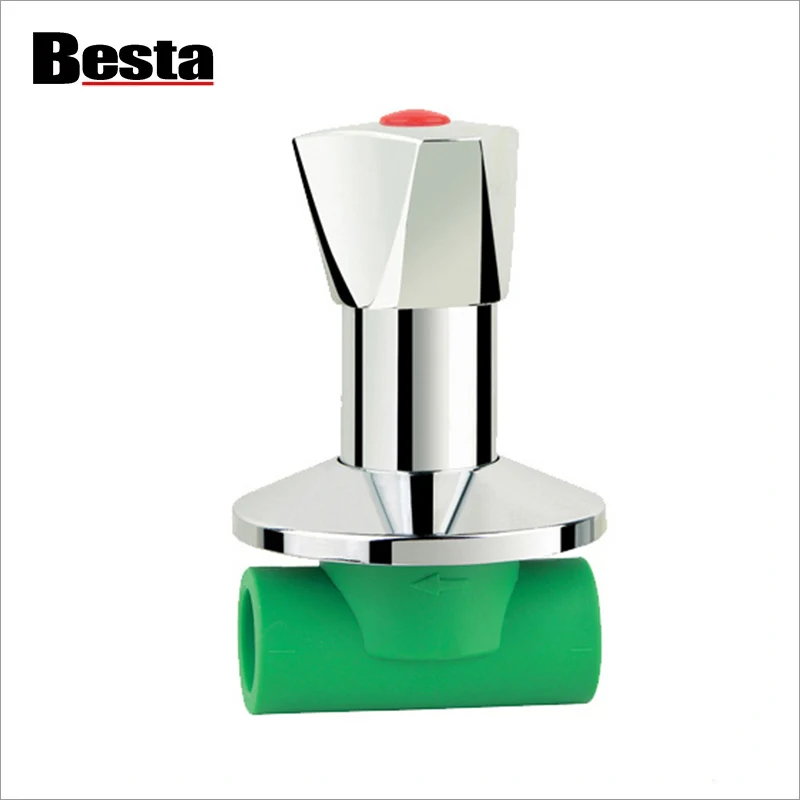
Primarily, PPR valves are categorized by their operation mechanism and function. The main types include:
-
Ball Valves: Designed for reliable on/off control. A quarter-turn of the handle rotates a ball with a port, completely stopping or allowing full flow.
-
Diaphragm Valves: Ideal for precise flow regulation. They use a flexible diaphragm that lowers onto a saddle to throttle the media.
-
Check Valves: Essential for preventing backflow. They allow fluid to flow in only one direction, automatically closing if flow reverses.
-
Thermostatic Mixing Valves (TMVs): Specialized for blending hot and cold water to deliver a safe, constant outlet temperature.
The following table details the core parameters and primary applications of these key Besta PPR Valve types:
| Valve Type | Key Parameters (Besta Standard) | Primary Function & Application |
|---|---|---|
| Ball Valve |
Pressure Rating: PN20/PN25 Temperature Range: -10°C to 95°C Connection: Socket Fusion |
On/Off control. Used for isolating sections of a system for maintenance or emergency shut-off in water supply lines. |
| Diaphragm Valve |
Pressure Rating: PN16 Linear Flow Characteristic Seal Material: EPDM |
Precise flow regulation. Commonly used in industrial process lines, chemical feed systems, and irrigation where adjustable flow is needed. |
| Check Valve |
Cracking Pressure: 0.05-0.1 Bar Installation Orientation: Horizontal/Vertical |
Prevent reverse flow. Protects pumps and equipment, prevents contamination in domestic water lines, and maintains system direction. |
| Thermostatic Mixing Valve (TMV) |
Thermostatic Cartridge: Class III Temp. Range: 35°C - 60°C Adjustable Safety Shut-off: Certified |
Temperature control & anti-scald. Critical for safe hot water delivery in hospitals, schools, gyms, and residential buildings. |
PPR Valve FAQ
Q: Can a standard PPR ball valve be used for flow regulation?
A: It is not recommended. While partially opening a Besta ball valve can reduce flow, it is designed for full open or closed positions. Using it for prolonged throttling can cause erosion of the ball and seat, leading to premature failure and leakage. For regulation, use a diaphragm valve designed for that purpose.
Q: What factors determine the service life of a PPR valve?
A: The lifespan depends on operating conditions and proper selection. Key factors include consistent operating temperature and pressure within the valve's PN rating, chemical compatibility of the media with the valve body and seals, correct installation via thermal fusion, and adherence to recommended maintenance schedules, such as periodic operation of ball valves to prevent seizing.
Q: How does a thermostatic mixing valve (TMV) enhance safety?
A: A Besta TMV continuously blends hot and cold water to a pre-set, safe outlet temperature using a thermostatic element. If the cold supply fails, it instantly shuts off the hot water to prevent scalding. Conversely, if the hot supply fails, it stops the flow to avoid a cold shock. This automatic fail-safe mechanism is vital for protecting vulnerable users.
For a system that demands reliability, understanding and specifying the correct PPR valve is non-negotiable. Each type serves a distinct purpose, and choosing the wrong one can compromise performance and safety. At Besta, we don't just supply valves; we provide engineered flow control solutions. Our range of PPR valves is manufactured to exacting international standards, ensuring durability, ease of installation, and peace of mind. Whether you are a contractor on a residential project or an engineer designing a complex industrial system, our technical experts can help you select the perfect valve for your application.
Contact us today to request detailed technical datasheets, discuss your specific project requirements, or locate your nearest Besta distributor. Let us be your trusted partner for superior fluid control.